Sunday, February 01, 2009

Moroccan Spice - Souk Cuisine in Marrakech, Morocco

The medina in Marrakech is mad! It’s noisy, dusty, in parts smelly, and, for many people, a lot of hassle. It’s a place where you frequently take your life into your own hands as motorcyclists seem to do their best to knock you over as you meander through the alleyways. Nevertheless, despite these frustrations, it is also addictive. There are few places in the world so full of colour, bustle and the sheer energy of life.

The medina sells everything from handmade brass bowls and leather slippers to chameleons and preserved lemons. Finding your way around the myriad of lanes and alleyways without getting lost is near on impossible. However, help is at hand in the form of Gemma van der Burgt. Gemma is Dutch (so speaks English well!) and has lived in the medina for about three years. She also runs Souk Cuisine, which offers to introduce visitors to the pleasures of Moroccan food. The one day shopping and cookery courses cost 400 Moroccan dirhams. They are held almost everyday from 10am until 4pm (ish) with the cooking taking place either at Gemma’s house or a local guesthouse, Chambres des Amis.

Gemma meets her apprentice cooks at the CafĂ© de France in the Djemaa el Fna. She then divides the, usually multi-national, group in half and sets them off on a challenge. The task is to buy all the items on the team’s shopping list, spending as little as possible on the way. Purses and a small budget of dirhams are provided. This somewhat daunting task is made a bit easier as Gemma who leads the teams to the stalls and drops heavy hints as to what should be bought and how much should be paid for each item. The task is a good challenge and a great way for inexperienced barterers to interact with the local shopkeepers in broken French.

Moving into the souk, Gemma introduces her trainees to a number of local characters and points out some medina secrets that might otherwise be overlooked. There’s a master butcher who specialises in roasting whole lambs over sandalwood in underground ovens. There’s Mr Mint, who sells…er…mint, an essential Moroccan ingredient as it is used for making the copious pots of mint tea drunk almost continuously by the local inhabitants. There’s Mr Egg, who sells egg sandwiches and obviously has a soft spot for Gemma, who he has nicknamed Mrs Plastic Bag as she always carries her own plastic bags.

The shoppers move on to buy spices from one of the many apothecaries. The owner has a wealth of knowledge, acquired from his father, as to the medicinal benefits of the many herbs and spices he sells. Kohl, used for eyeliner, for example, also protects against conjunctivitis; cumin is a cure for diarrhoea, and saffron apparently helps to cure asthma.


Having purchased the necessary spices, the group proceeds deeper inside the medina in order to buy fish. The fishmonger agrees to wash and prepare the fresh sardines as the two teams race to the vegetable market before all the best produce is sold. Gemma is very specific about the quality, size and shape of the vegetables so this part of the expedition takes some time as various stalls must be visited as the tomatoes, courgettes, aubergines and carrots are carefully assessed, weighed out and bagged.

Picking up the cleaned sardines en route, the group heads back to Gemma’s house after two hours in the market stopping off on the way to buy bread at the local bakery. Every few streets in the medina there is a district bakery, and communal oven. Local residents can take their own items to be baked in the oven for a small fee. Each family has their own distinctive way of shaping their bread and cakes so that they may easily be identified.

Gemma lives is a dar, which is traditional Moroccan house but, unlike a riad, it does not have an inner garden. Gemma renovated the property a few years ago and her kitchen is small, light and open to the elements. Her six students pack themselves in around the workbenches and, under the watchful eyes of Gemma and her Moroccan chef Ayesha, they set to work. Each person is tasked with making a different dish from the recipe booklet provided and using the freshly bought ingredients. Carrots are gutted, tomatoes are peeled and aubergines fried. The smells are delicious and, eventually, after an hour or so, lunch is ready.

The cooks sit down to a feast of Moroccan salads, fish tagine and almond cookies, all accompanied by Moroccan wine. All the participants agree that they have learnt a great deal and are impressed by their own culinary achievements. Kati, from Barcelona in Spain, says her favourite part was the “chopping, smelling and tasting” whereas for Anne, from the Netherlands, it was the medina shopping expedition that appealed to her most. The group unanimously agrees they have had a very special insight into both the cuisine and daily life of Moroccan people. The newly-christened Mr Carrot, Mrs Tagine and Ms Aubergine eventually depart following their long and leisurely lunch in order to attempt to find their way out of the medina…or is it simply to get lost again?

Website: http://www.soukcuisine.com/index_ENG.html
E-mail: info@soukcuisine.com
Tel: +212 (0) 73 80 49 55

Thursday, April 17, 2008

Deli-cious Deli Dining, New York, USA

In what was once the new home for many of Europe's immigrant families arriving to start a new life in the good ole US of A, Lower Eastside Manhattan was a place where the old world met the new in terms of eating habits.

In 1888, a Russian Jewish immigrant family, hence the Yiddish on the menu, established Katz's Delicatessen on the eastern corner of Ludlow and Houston (pronounced How-ston) Streets. It later moved to the western side of Ludlow due to the construction of the New York Subway. In 1946, the deli expanded in order to accommodate the hungry crowds.

Katz's is all about the beef - brisket, corned, pastrami and knoblewurst - and very popular it is, too. Each week, the deli reportedly serves 5000 pounds of corned beef, 2000 pounds of salami and 12000 hot dogs. It's been visited by four US presidents and a host of other celebrities whose snapshots now adorn the walls.

A number of films, including "Donnie Darko", have been shot here but it's probably most famous for the "I'll have what she's having" fake orgasm scene in the 1989 romantic comedy "When Harry Met Sally...". The table at which Meg Ryan and Billy Crystal sat is marked with a sign that says "Where Harry met Sally...hope you have what she had!"

Hanging overhead are other signs including one of the restaurant's popular slogans: 'Send a salami to your boy in the army', which was created when the family's three sons were serving in the forces during World War Two and has persisted today with salamis being sent to serving troops in Iraq.

Lunchtimes are noisy and very brisk. Customers queue up in front of the counter to be served and take their tickets to the cash desk on the way out to settle up after ploughing their way through the mountains of meat piled high on their plates. A popular choice is the Rueben, a corned beef, Swiss cheese, Russian salad and sauerkraut combo. It's hard not to eye up your neighbour's choice though and wish you were having what she was having.

Katz's Delicatessen
205 E. Houston Street
New York 10002
Tel: 212-254-2246
Fax: 212-674-3270
Opening hours:
Mon, Tues: 08:00-21:45
Weds, Thurs, Sun: 08:00 - 22:45
Fri, Sat: 08:00 - 02:45
http://www.katzdeli.com/

Wednesday, January 02, 2008

Sentenced to an Artistic Dinner in Toronto, Canada

Close to the intersection of Church and Adelaide Streets in downtown Toronto sits the Adelaide Street Court House or as it was once known, York County Court House. It was built between 1851 and 1852 by Cumberland and Ridout, who were also the architects responsible for the current incarnation of St. James' Cathedral just around the corner, built in 1853.

The building itself now houses a jazz club called Live@Courthouse and Terroni, a Southern Italian-style trattoria. Terroni, which means "people of
the earth" is part of a chain in Toronto. The Court House location, which opened in December 2007, is the most recent addition. The interior is stylish with giant fireplaces, modern Italian art, an open kitchen, a spacious enoteca (wine bar) and a delicatessan selling Parma ham and other imported Italian specialities. The former cells in the basement now house the restaurant's wine cellar. The food is typical Italian fare with pasta, pizza and meat dishes featuring highly. The Spaghetti al Limone is simplicity at its best.

The Court House has borne witness to many events including the last public execution in Toronto and the formation of Canada's renowned artistic movement, the Group of Seven.

The Adelaide Street Court House was the third court house in Toronto and in 1910 hosted meetings of the Arts and Letters Club of Toronto on its second floor. The Club had been formed in 1908 by Augustus Bridle, an arts journalist, who had encouraged about 100 men to jo
in him in regular discussions of artistic creativity. Originally located above the Brown Betty restaurant at 36 1/2 King Street East, the Club members were evicted and moved to the Club's new home above the Court House. The lease required that members use the rear entrance on Court Street and so the venue became known as the Club's Court Street Quarters.

Members of the Arts and Letters Club represented those interested in literature, architecture, music, painting, sculpture, photography and the stage. Notably, the Club was the meeting place for a group of artists, later to become known as the Group of Seven, although the membership actually numbered ten in the end and eventually changed its name to the Canadian Group of Painters.
Tom Thomson, J.E.H. MacDonald, Arthur Lismer, Frederick Varley, Frank Johnston, A.Y. Jackson, Lawren Harris and Franklin Carmichael were all original members of a group of landscape artists looking to create a new direction for Canadian art who met on a regular basis. Tom Thomson drowned mysteriously in Algonquin Park during the spring of 1917 but his name became synonymous with the Group. A.J. Casson, who liked to call himself number eight of the Group of Seven," once recalled that they would all meet "just about every day, for company and a good meal."

In May 1920 the Group of Seven, the original members minus Tom Thompson, held their first exhibition at the Art Gallery of Toronto. Their landscapes were strongly influenced by both Post-Impressionism in France and Scandinavian art. Their canvases were bold and vividly-colored bringing a new edge to artistic creativity in Canada by capturing their interpretation of the country and such views as those of Algonquin Park, the Arctic and the western mountains.

In 1926 A.J.Casson replaced Frank Johnson in the Group following his resignation. Later, in 1930, Edwin Holgate (of Montreal) and L.L. FitzGerald (of Winnipeg), in 1932, were asked to join the Group. The final Group of Seven exhibition was held in 1931. Many of the Group's works can be seen at the McMichael Canadian Art Collection in Kleinburg, just outside Toronto, and at galleries across Canada. Eventually, a further eviction notice was served and the Arts and Letters Club relocated to its present home at 14 Elm Street.

Address: 57a Adelaide Street East
Tel: 416-203-3093
Opening hours: Mon - Sat 9:00 - 23:00
http://www.terroni.ca


Afternoon Tea at the Windsor in Toronto, Canada

Located in the affluent area of Yorkville with its swanky restaurants and just off the city's Bloor Street, lined with designer stores such as Tiffany, Gucci & Prada, you can find one of Toronto's best kept secrets, the Windsor Arms Hotel. Ideally situated for those wanting to hit the shops and take in some of the city's best museums such as the Royal Ontario Museum and the Bata Shoe Museum, the hotel is a classy boutique style residence with 28 guest rooms, including 26 suites. There's also a fitness centre, spa and swimming pool.

The building dates back to 1927 when hotelier William Arthur Price decided to open a new hotel. It was designed to blend in with the nearby University of Toronto, with its neo-Gothic Victorian buildings.

This recently revitalised hotel might have disappeared forever had developer George Friedmann not transformed and reopened it in 1999 following years of neglect and its eventual closure in the 1980s. Many of the original features have been retained, such as the stained glass window and the stone portico and vestibule entrance on St Thomas Street.

The tearoom still has its original 1927 fireplace although it now has a very contemporary decor.
It's a real treat to sit in the tearoom and over a refreshing cup of tea, delicate sandwiches and divine pastries to reflect on all the visiting glitterati who have passed through the doors. During the 1950s and 70s, Elizabeth Taylor kept a year-round suite in the hotel.

More recently the co-founders of the Toronto International Film Festival Bill Marshall, Henk Van der Kolkand Dusty Cohl came up with the idea for hosting the film festival as they sat in one of the hotel's bars, now the barbershop. Now, many of the Hollywood Moghuls and red-carpet bound film stars stay here when attending the annual festival in September.

Address: 18 St Thomas Street, Toronto
Tel: 416-971-9666
Fax: 416-921-9121
www.windsorarmshotel.com
Rates $250 - $1750
Afternoon Tea: $24-30

Sunday, November 18, 2007

Eating History at Mother Lake, China

A culture dominated by women! No marriage! Sex as pleasure! Fresh food in abundance!
The Mosuo people can be found on the shores of Mother Lake (Lugu Hu), at the foot of Mother Mountain, on the border of China's Sichuan and Yunnan Provinces. Their story is told best by Yang Erche Namu in her memoir Leaving Mother Lake (2003). Now Namu has opened a guest house http://www.namupalace.com/ on a peninsula overlooking this remote and beautiful lake. Here the intrepid tourist can experience the lake and enjoy a taste of Mosuo culture with Namu's extended family.

We arrived at Mother Lake after a stunning 10 hour scenic bus trip from Lijiang along the Yangtse River through 5 mountain ranges. On arriving at the guest house, we were served hot butter tea (salty and tasty) and sulima wine (like a rich sherry) by Namu's cousin and then taken to a nearby restaurant owned by her brother and his family. Here we selected fresh fish and vegetables in the open kitchen for our dinner served in a large wooden room decorated with a Tibetan shrine and posters of Namu. The food was very fresh but not particularly spicy or exciting.

The next day, after a breakfast of Mosuo pancakes (a kind of leek flatbread) we were taken by pig trough boat to Bird Island for a picnic. The women rowed and the men cooked. The main course, a live chicken, travelled with us in the small boat. While we explored the island, the chicken was boiled with potatoes and vegetables. Again, the food was very fresh and nourishing but a little bland. However, it went very nicely with beer chilled in the pristine lake.

That afternoon we were invited to tea with Namu's mother who still presides over the family compound in a small village on the Sichuan side of the lake. We were served butter tea, sulima wine, and fresh crispy cakes in a tiny room with an open fire, a poster of Mao, and 3 or 4 Mosuo hams hanging from the ceiling. This room is exactly as described in Leaving Mother Lake.

Fortunately our fellow guests were fluently bi-lingual and could translate Namu's mother's conversation about her famous daughter and the old ways. When our Chinese friend asked if they still followed the old customs and spoke the ancient language, she answered in Mandarin "You are many and we are few". Her daughters have moved to the city but her sons have stayed behind. She proudly showed us her goat and a new room she has built for her youngest son and his family. Offering us more food for the journey back, she did a little dance step and wished us well.

After visiting the wetlands at the end of the lake and the sacred cave in the heart of the mountain (now reached by chairlift), we finished our day with hotpot back at the family restaurant surrounded by mounds of food and many children.

The Mosuo people in their remote land are a colourful reminder of a unique culture which has been almost lost to the world. Because of Namu and a small band of cultural anthropologists, we can live a little of that fascinating history.

Monday, November 12, 2007

Bagels for Breakfast, Lunch and Dinner in Montreal, Canada

What is a bagel? Well, it's essentially a bread roll with a hole in it. However, it's the texture that makes it distinct. The outside is usually brown and slightly crispy. Once you bite inside, it's usually dense, chewy and doughy.

These bready bites come in a variety of flavours and are o
ften topped with seeds baked onto the outer crust. Legend has it that the bagel originated in Vienna, Austria. The story goes that in 1683 a (probably) Jewish baker wanted to thank the king of Poland for protecting his countrymen from Turkish invaders and celebrate victory in the Battle of Vienna. In order to do this he made a special bread roll in the shape of a riding stirrup, known as a 'SteigbĂĽgel' in German. However, another theory is that the bagel originated in Krakow, Poland sometime earlier. There are historical references to women being given 'beygls' as a gift during childbirth. Bagels are still used by mothers as teething rings today.

The bagels popularity in Eastern Europe spread and eventually these bread rolls made their way to Russia where they were sold on strings and viewed as a symbol of good luck.

At the turn of the 20th century, Eastern European immigrants began pouring into North America and with them brought their recipes for bagels. Many settled in Canada and in 1919 Isabel Shlafman opened the first bagel bakery in Montreal in a lane just of the street which was at that time known as 'The Main'. Today this street is Saint-Lawrence Boulevard.

The bagels were rolled by hand and baked in a wood-fired oven, as they still are today in the bakery's present location on Fairmount Street which lent the bakery its name. The Original Fairmount Bakery officially opened for business in this spot in 1949 in what was a converted cottage housing the family above the shop. The family still runs the business today.

The bakery is open 24 hours and seven days a week. There are often queues out the door as customers line up to purchase the fresh bagels in flavours as diverse as sun-dried tomato and chocolate chip. Also on sale is a selection of accompaniments such as smoked salmon, tzaziki and cream cheese. Bagelicious!

Address: 74 Fairmount Street West, Montreal, Canada

Tel: (514) 272-0667

http://www.fairmountbagel.com/


Ducking & Diving at The Drake, Toronto, Canada

The Drake Hotel is one of Toronto's hippest hotels. Located on the fashionable Queen Street West strip, the Drake epitomizes the gentrification of this bohemian gallery district which now attracts downtown business folk as much as it does the creative types.

A one-time dosshouse, this 19th century building was originally known as Small's Hotel. It opened in 1890 in order to service the Canadian Pacific Railway that linked Downtown Toronto with the city's lakeside beaches to the west.

In 1949, a gentleman called Michael Lundy bought the place. He added the grand lobby staircase as well as a lounge and restaurant to the hotel, which he renamed The Drake.

The hotel fell into disrepair over the years as it experienced life as a punk bar and rave venue before finally being resurrected by Jeff Stober in the early 21st century.

Perfect for hanging out with Toronto’s trendy set, the hotel’s Sky Yard Bar and Underground music venue are where the weekend action is. The decor now combines high-end design with relics of the hotel's past.

The 19 upstairs guestrooms are all individually kitted out with vintage furniture, reveal-all bathrooms and hi-tech gadgets. For the amorous, an erotic room-service menu with a whole different set of gadget to play with is on offer. If you are more in the mood for snuggling down together with a good book, a recommended read and knitted dolls are provided in each room. After a long lie-in, there’s a street-side cafĂ© where you can enjoy a leisurely brunch.

Address: 1150 Queen Street West, Toronto, Canada

Tel: 416-531-5042

www.thedrakehotel.ca

Double room: $152-289 (+ tax)


Monday, October 08, 2007

Something Fishy Going On at Tsukiji Market, Tokyo, Japan

If there’s on place to see over 400 different types of fish and seafood other than in the world’s oceans, it is at the Tsukiji fish market (築地市場, Tsukiji shijĹŤ), part of the Tokyo Metropolitan Central Wholesale Market which also handles meat, vegetables and flowers. One of three fish markets in Tokyo trading over 700, 000 metric tonnes of seafood equivalent to 6 billion US dollars in value, Tsukiji is not only the largest fish market in Tokyo serving its 20 million plus residents but also in the world.

Tsukiji handles about 2000 metric tonnes of seafood a day, employs around 60,000 workers and deals with everything from seaweed to some of the world’s most expensive caviar. It’s probably most famous for its tuna, some of which weigh in at a whopping 300kg.

The current market was built in 1935, after the Great Kanto Earthquake, and now attracts an average of 52,000 visitors per day. Its roots, however, stem from the 16th century when the first Tokugawa shogun and builder of Edo, now Tokyo, Tokugawa Ieyasu invited fishermen from Tsukudajima in Osaka to provide seafood for Edo castle. Fish not purchased by the castle was sold near the Nihonbashi Bridge in Edo. Merchants at this riverside fish market or ‘Uogashi’ were licensed by the Shogunate and soon became wealthy as population growth lead to demand increases and distribution networks became established. Trade was at that time based on negotiation between buyers and sellers.

In 1918, the so-called ‘Rice Riots’ took place across Japan in protest against food shortages and the trading practices of wholesalers. As a result, a Central Wholesale Market Law operating the markets through an auction system was established in 1923. In the same year the Great Kanto earthquake occurred and many of the private markets in Tokyo were destroyed. It was decided to construct central wholesale markets. Nihonbashi fish market was relocated to the Tsukiji district (near Tsukiji Shijou Station on the Oedo subway line and the Tsukiji Station on the Hibiya subway line) and began operating once construction of the new market was completed in 1935.

The market consists of inner and outer market areas. The inner market area, or ‘jonai shijo’ is the licensed wholesale market and where the auctions, most of the fish processing and wholesale dealer transactions occur. The outer market area, or ‘jogai shijo’ contains a mixture of wholesale and retail shops selling restaurant supplies, fishmonger tools and supplies (knives, wellington boots etc), groceries, seafood products and restaurants. The wholesale fruit and vegetable market is in this section.

Tsukiji market is open daily from about 3:00am apart from Sundays and public holidays but probably best to check if you're planning an early morning visit.

Trucks arrive during the night to unload all the fish which has been transported from the various oceans of the world to Tokyo by ship or plane and after the the unloading, pre-auction inspections take place. Around 5:00am the auctions commence. Officially, tourists are not allowed into the inspection areas and auctions themselves although there are a few viewing spots and the remainder of the market is still accessible. Apparently, it is sometimes possible to get into these areas discreetly and as long as you are respectful and do not touch the fish, a blind eye is usually turned.

The auctions tend to end around 7:00am at which point the fish is then moved to stalls by cart and taken to stalls operated by middlemen or loaded onto trucks for transportation to other destinations. If you linger by the middlemen's stalls, you can witness the stallholders preparing the fish for sale. Watching them cut the larger fish, such as tuna and swordfish is fascinating, and butchery becomes an art form. Something akin to samurai fishmongery.

It is suggested that you take a tour of the market but you can wander around by yourself but bear in mind that some areas might be off-limits.

The Tsukiji Market has 3 entrances: the main entrance, the Kaiko-bashi entrance and the Kachidoki-bashi entrance.

Kachidoki-bashi is a large drawbridge on Harumi Street. At the entrance gate, you will see a small office occupied by Tokyo Government guards. You can ask for a booklet and map here which introduces the market in Japanese and English.

Once you’ve finished viewing the many different types of fish and all the market life, you can wander over to one of the several restaurants located in Building 6 of the outer market, join the long queues and sample some of the freshest sushi in Japan. Daiwa Sushi (大和寿司) and Sushidai (寿司大) are two of the most popular restaurants. They open around 5:00am and close around midday as the market activity dies down and cleaning begins.

One final piece of advice is to take extreme care as you walk around the market area as it is a very busy working market, with slippery floors, knives and fish hooks all around. You will see lots of motorized carts whizzing around all over the place at speed - they are just trying to get on with business. Be careful, especially if you have children with you.

Official website:

Tsukiji Wholsale Market

Location map

Market Tours:

Tsukiji Tour

Kokopelli

Sunday, April 22, 2007

Be Part of the Movie Set in Tokyo, Japan

Tokyo is one city that can often make you feel as if you are walking on a movie-set. You might imagine the director about to shout ‘cut’ at which point the extras who surround you, many of whom are dressed in bizarre outfits, will all scuttle away and the amazing set around you will be dismantled. It is, however, real and perhaps it is its ‘other-worldliness’ that has lead to it inspiring movies such as Blade Runner and being the location for Sofia Coppola’s more recent Oscar-winner Lost in Translation. One other recent blockbuster also took influences from the city, and more specifically, the Gonpachi restaurant on the edge of the Roppongi hills at Nishi-Azabu. That film was Kill Bill: Vol. 1 whose acclaimed director, Quentin Tarantino, apparently used the restaurant interior as a basis for the ‘House of Blue Leaves’ in his film where ‘The Bride’ (Uma Thurman), decked in a yellow motorcycle jumpsuit, ‘kicks arse’ in one of hell of a martial arts fight scene.

Although not actually filmed in Japan, the set was apparently constructed on a soundstage in Beijing, it is rumoured that Tarantino took inspiration for the scenes from the restaurant and held a wrap party there. More recently, the former Japanese premier, Junichiro Koizumi, entertained George W. Bush in this rather rustic-looking izakaya (Japanese bar or restaurant). It’s certainly atmospheric and retains a down-to-earth feel with diners welcomed vociferously by all the staff on arrival. You can sit at tables on the balcony level or around the central kitchen area where delicious yakitori (barbecue grilled skewers of meat or vegetables) are prepared. The Eringi mushrooms, Kuroge beef and bacon wrapped tomatoes were all cooked to perfection. Soba (buckwheat flour) noodles are another house speciality and suggested as a filler after you have sampled the various tapas-style offerings. The place gets busy so either get there around 6pm or book ahead.

You might not see Uma whooping it up in the flesh with Quentin but you can certainly recall images of her flying through the air and dispatching members of the underworld as you enjoy the food and atmosphere of the place without a yellow jumpsuit in sight!


Address:

Gonpachi

1-13-11 Nishi-Azabu

Minato-ku

Tokyo 106-0031

Japan

Tel: 03-5771-0180

http://www.gonpachi.jp/en/casual/home/index

Opening hours: 5pm – 2am

Credit cards accepted

Tuesday, February 06, 2007

Gastro Revolution in Havana, Cuba

Cuba is perhaps best known for its socialism, salsa, rum, vintage cars and cigars rather than its gastronomy but amid the decaying colonial buildings and pot-holed streets of a city which until recently appears to have been stuck in a 1950s timewarp, there can now be found a few hidden gems.

In the 1950s, American movie stars and gangsters ruled the roost in this vibrant Caribbean city by gambling and partying until the place rocked. And rocked it was when Castro and his revolutionaries swept to power. A population exodus, the US blockade and an era of isolation followed in which socialist friends supported the remaining population of this small island state and its charismatic leader in their stance against the might of Uncle Sam and his cronies.

Times change and the latter half of the 1990s saw Cuba follow its socialist pals by somewhat reluctantly embracing a more 'commercial' form of socialism. Tourism. Poor infrastructure, tight government control and restricted imports, however, mean that the industry has not been able to flourish in quite the same way as its Caribbean neighbours. In terms of servicing the tourists most hotels and restaurants are state controlled. Restaurants often have limited menus due to food rationing and although cheap are not usually able to stretch much beyond providing the average customer with something to line their stomach. Indeed, there is a Cuban joke about the standard of the cuisine, "The three great gains of the revolution - health, education and culture - have been at the expense of breakfast, lunch and dinner."

The government eventually decided that private individuals should be given the chance to profit from the growing tourist market and so introduced 'paladares'. Apparently named after a restaurant in Brazilian soap opera these small restaurants are able to offer home-cooked food despite being evermore tightly controlled and subject to a wealth of regulations. These regulations include a limit of the number of diners, theoretically a maximum of twelve, and rules that employees must be family members and that seafood or beef cannot be served. Free enterprise has not completely arrived. However, the paladares existence means that tourists can sample something other than the staple tourist fare of comida criolla (chicken, pork rice and beans), moros y cristianos (beans and rice) or peso pizza. Paladar prices are still out of reach for most Cubans so don't expect to be dining with the locals.

Paladares vary in standards but one that has attracted some notoriety both for its clientele and cuisine is La Guarida ('the hideaway or den'). Hard to find in a residential area of Vedado, only the bouncers on the door would suggest anything special lies behind the crumbling walls of this former palace, now an apartment building.

Washing hangs from clotheslines, a dusty old car is parked in the former entrance hall and as you climb the winding marble staircase that once exhibited more grandeur than it does today you might even see a gaggle of children playing baseball in the former ballroom, at one time more used to dancing than batting. Eventually you reach the third floor and through a wooden door you feel as if you have entered a brave new world. La Guarida is in reality an apartment like many of the others on the corridor but its mustard yellow walls, cluttered Cuban kitsch decoration and photographs of famous American visitors coupled with the flavoursome aromas emanating from the tiny kitchen sandwiched between the dining rooms make it feel atmospheric and as if you are somehow subverting the Cuban socialist ideal.

Indeed, La Guarida does have what some may consider to be a 'subversive' past. Tomás Gutiérrez Alea's controversial and Oscar-nominated Cuban film 'Fresa y Chocolate' (Strawberries and Chocolate) was shot here during the early 1990s, considered to be a black period for Cuba when the fall of the Soviet Union lead to an economic crisis as Cuba lost a key financial backer. The title of the film refers to ice cream flavours - the colour of strawbery ice cream, pink, is a metaphor for homosexuality and creativity, the brown of the chocolate symbolises the daily slog of state-controlled life. Tasting his ice cream, one of the film's main protagonists remarks that it, "is the only good thing left in this country. Soon they'll export it, and for us ... water and sugar." Today, film-makers and film stars visit the former film set. Uma Thurman, Benicio del Toro, Jack Nicholson, Pedro Almodovar and Steven Spielberg have all eaten here.

The food is considered to be nuevo Latin cuisine combining local ingredients in a fusion of Cuban and European styles. Whilst it may not rival that served in restaurants across the water it does attempt to move away from the more staple Cuban dishes and add a creative twist in terms of combining meat and fish dishes with more exotic flavours, for example, tuna in a coconut sauce. The bar is fully stocked but, be warned, don't ask for a Bacardi rum, the Bacardi family are not flavour of the month in Cuba. Havana Club is a better option. Things have moved on from Cuba's dark days when the Soviet Union collapsed, the Russians left and the period when 'Fresa y Chocolate' was set. Now there is a lot more than ice cream on the menu, although you can have your own taste of strawberry and chocolate ice cream, and Cuba can begin to think about exporting its positive gastronomic reputation rather than simply water and sugar.

Meal for 2 including drinks: approx $40
Reservations recommended.

La Guarida
Concordia No.418 /Gervasio y Escobar.
Centro Habana.
Havana
Tel: (537) 863-7351, 866-9047

Spanish website:
http://www.laguarida.com/index.php

Monday, November 27, 2006

Party like The Party at Rui Jin, Shanghai, China

In the heart of Shanghai's French Concession lies an oasis of calm and respite offering a breather from the noise, chaos and pollution of one of the world's mega-cities.

The Rui Jin hotel and garden complex comprises of a number of buildings dating back to Shanghai's previous heyday of the 1920s and now encountering a resurgence in the 21st century boom the city is now experiencing.

The two original buildings of the four located on the estate, which also houses three gardens and a small lake, were built in the 1920s by a British man, Henry Lester 'Mohawk' Morris. The other two buildings on the estate were completed in the 1930s. Morris was the founder of the North China Daily News, a horse and greyhound breeder and leading figure on the local dog-racing circuit - he practically owned the 'canidrome' on Maoming Lu. Along with his two sons, Harry and Hayley, a German businessman and a Japanese ex-pat, Morris lived on the estate for many years.

Mohawk Morris remained on the estate until his death in 1952 but prior to this most of the buildings were taken over by various political factions. During the Japanese occupation, part of the estate was used by the Mitsui Trading Company and the Mitsui Garden was established. In 1945, the Kuo Ming Tang used the property as their headquarters and Madame Song Mei Ling, Chiang Kai Shek's wife, once stayed here. The Communist Party moved in in 1949 and the buildings were used by a number of Party officers including Shanghai's first mayor, Mr Chen Yi. In 1956, the estate became a regional government hotel and many of China's leaders, as well of heads of state from around the world, stayed here. The guesthouse was opened to the public in 1979.

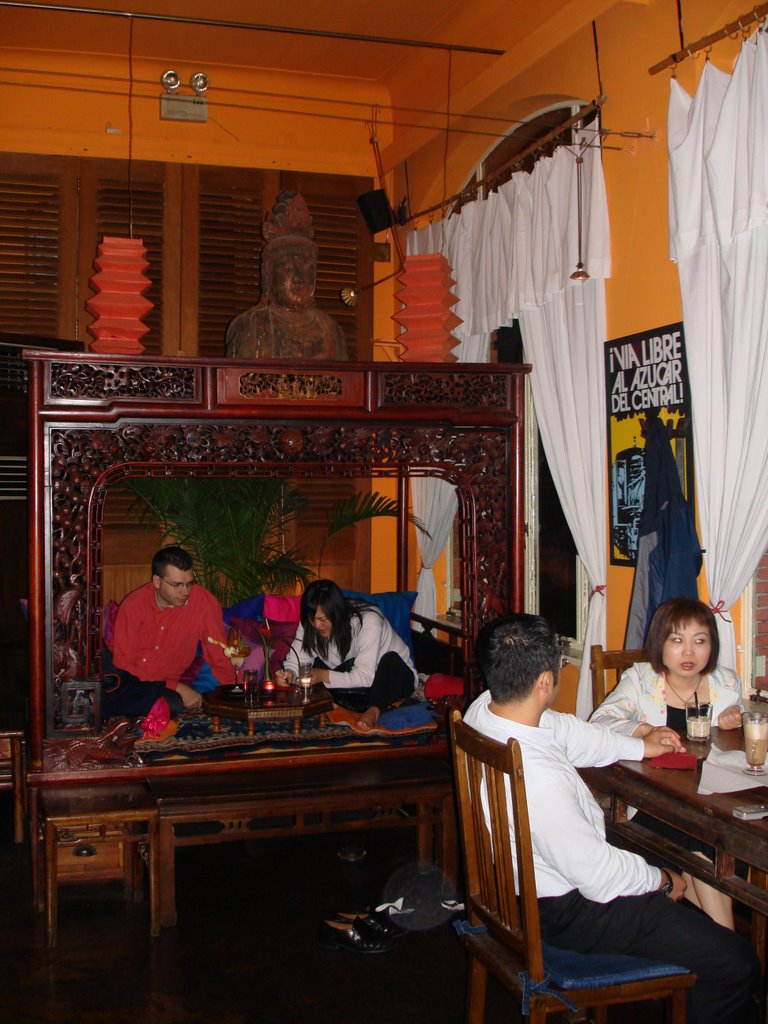
Now, as well as containing the Rui Jin Guesthouse, part of the complex is occupied by restaurants and bars. Most notably, the Face Bar, which is housed in a large, red-bricked villa. The Face Bar is part of a chain of Asian 'caravanerseri' bars and provides a relaxing environment filled with rich colours and Chinese artifacts, including a number of traditional raised beds. The bar caters for the Shanghai elite and as well as an assortment of drinks serves divine desserts, which can also be found at the Visage cafe in the Xintiandi complex a few blocks away.

Also housed in the same building as the Face Bar is the Lan Na Thai restaurant. Lan Na Thai means 'many rice fields' and is the name of a region in northern Thailand. The food is delicate and authentic with prices of approximately 100-100RMB for a main course. Just next door, in what appears to be a converted garage, is the Indian restaurant, Hazara, named after an Afghan tribe and region. The food comprises of traditional snacks, curries, tandoori and handi-cooked specialities. All are deliciously spiced with complementary flavours. A meal for two with beers is in the region of 600RMB so not cheap for China but worth the splurge if you have a big wallet. The style of cuisine served emanates from northern India and is served in a beautifully decorated dining room full of original Indian-crafted items. The bonus of all these restaurants being housed in the one complex is that you can finish off the evening with coffee and an aperitif in the beautiful grounds under the trees lit with romantic lanterns and feeling a million miles away from the hustle and bustle of China's second city.

http://www.facebars.com/en/shanghai/restaurant/

Discovering New Heights in Shanghai, China

The Bund in Shanghai is a one mile stretch of the western side of the Huangpu River and has been witness to much of the city's turbulant history. The word 'Bund' is thought to originally come from the Urdu word 'band', meaning an embankment, levee or dam, and to have been brought to Shanghai by the hotelier, Victor Sassoon, who built the Cathay Hotel (now called The Peace Hotel) on the corner of The Bund and Nanjing Road. Originally a tow path along the river, the Chinese authorities required 30 feet of space to be left between the water's edge and any buildings constructed along The Bund in order to allow movement up and down the path and account for tidal variation.
Buildings started to be constructed along The Bund, formerly part of the British settlement but later becoming part of the international settlement, in the late 19th century and the building boom continued into the early part of the 20th century. This area along the river rapidly became a major banking and trading hub in East Asia.

After the Communists came to power, many of the banks and trading houses along The Bund were closed or forced to move out. A later reversal of policy saw many of the landmark buildings restored to their former use but it was in the 1990s that the Shanghai Municipal Government decided to regenerate the area in a bid to boost tourism. The view of The Bund has now changed with a 10-metre high levee and walkway constructed in order to prevent flooding. Despite its ugly appearance the walkway provides promenading opportunities for both Shanghai residents and tourists as well as great views of both the buildings on The Bund, the Huangpu river traffic and the Pudong skyscrapers beyond.

Towards one end of the mile-long stretch, lies No.3 The Bund, an elegant post-renaissance building built in 1916 by the Union Assurance Company and for many years occupied by the East Asiatic Bank and the Mercantile Bank of India.Having fallen into disrepair, the building was re-designed by a US architect, Michael Graves, and re-opened in 2004. The building now houses designer shops, a spa, an art gallery and three excellent restaurants bringing a touch of style back to The Bund, not that it ever really went away for long.

On the 7th floor is New Heights, a contemporary brasserie offering fabulous views, great food and stylish dining at a much more reasonable price than some neighbouring restaurants on The Bund.

The interior is modern with a wonderful wine cellar lining the interior corridor, open kitchens, a bar area and 'Ally Mcbeal style' conveniences i.e. unisex. The exterior though is where it's at and it's well worth booking a spot on the terrace in order to benefit from its superlative view. Outdoor heaters are provided for nights with a chill in the air. If you're able to really splash out, you might be interested in the Cupola, which houses two private dining rooms, above the terrace.

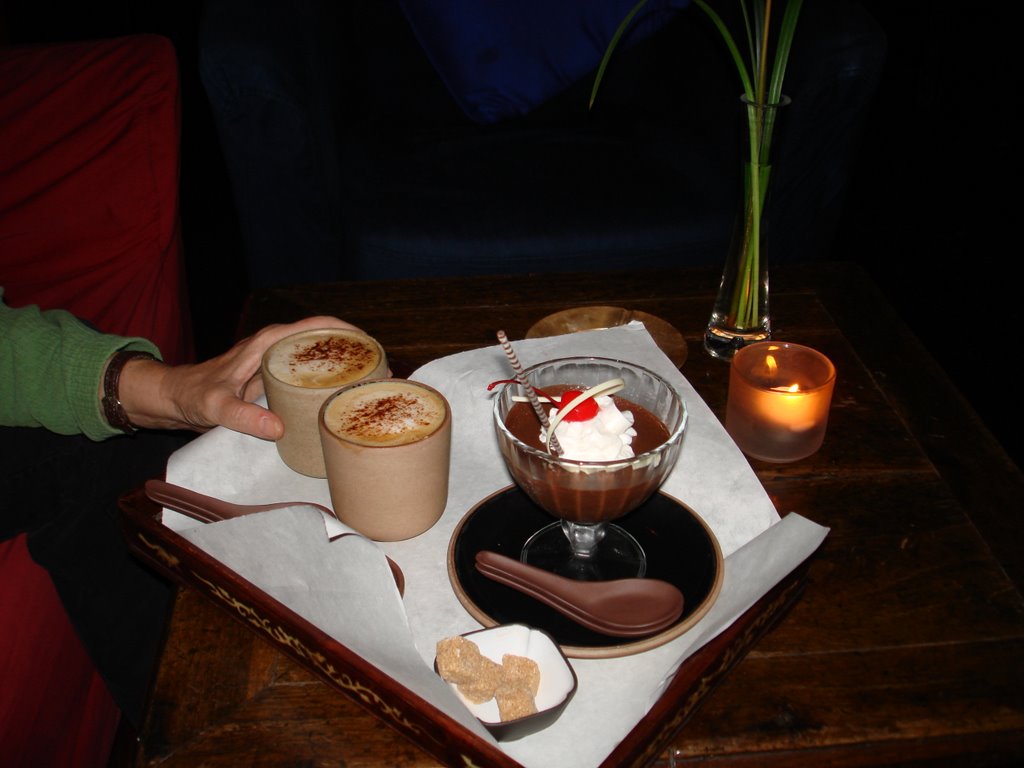
The restaurant kitchen is headed by Neal Giles, an Australian who has previously worked at the Burj Al Arab in Dubai and the menu, catering for both Asian and Western tastes, amuses by offering things that swim, things that walk etc. A nice touch to finish is the chance to have mini deserts - half price and half the calories but all the taste. The hot chocolate fondant with rosemary ice cream (pictured) is simply divine. However, if you really want to finish the night with a Shanghai flourish take a stroll along The Bund and simply drink it all in.

Address: 7/F, 3 on the Bund, Shanghai

Tel: 021-63210909

Opening hours: 10:00 - 02:00

Total bill for 2 with wine: approx 400-500RMB

All major credit cards accepted.

Reservations recommended.

Culinary Alchemy at The Fat Duck, Bray, UK

As you walk through the sleepy village of Bray, nestled on the River Thames in Royal Berkshire, you would not necessarily be aware of the gastronmic delights contained within its boundaries. Bray is home to two of the UK's three 3* Michelin restaurants, The Waterside Inn, owned and run by the Roux family, and The Fat Duck, owned and run by Heston Blumenthal.


The Fat Duck is just a few miles from the Queen of England's castle in Windsor and was named as 'the best restaurant in the world' in 2005 by Restaurant magazine. It has now slipped ever so slightly to number two after El Bulli in Spain but that just leaves room for further improvement...perfection needs to be challenged every now and then, and Heston Blumenthal no doubt relishes the competition.

Brits today take an average of 27 minutes for a lunch break and spend £3.20...trust me, you'll spend longer and a lot more on lunch at The Fat Duck...but enjoy every mouthful.

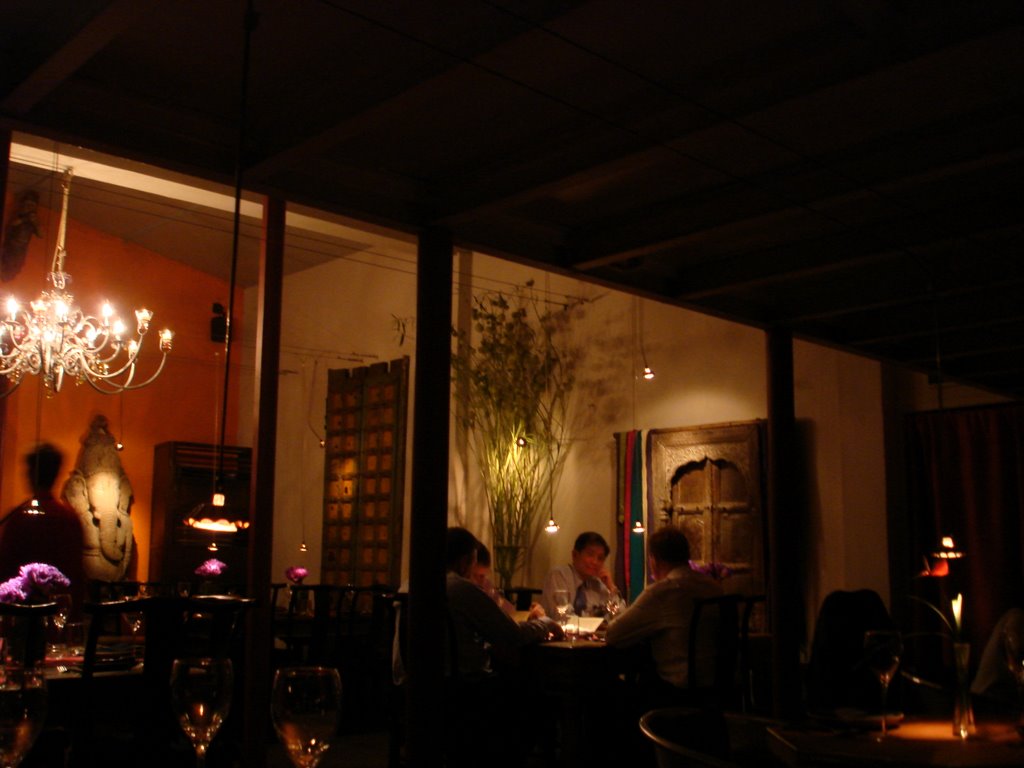
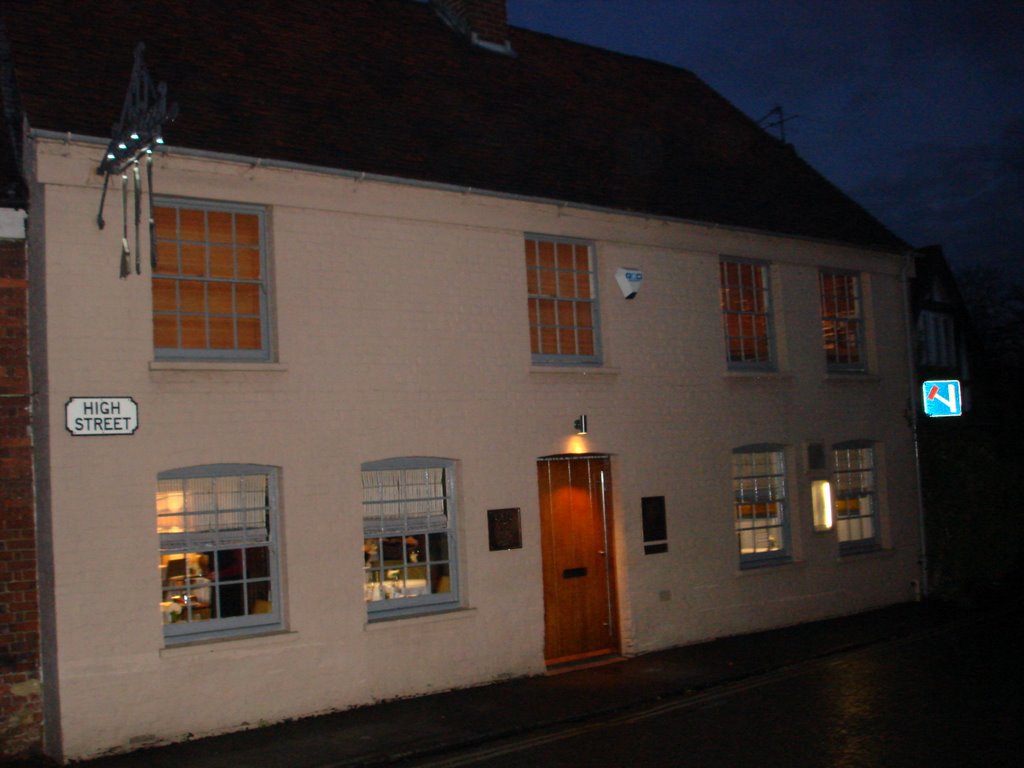
The biggest hurdle, apart from the financial shock of spending upwards of £80 a head on a meal, and that's without wine, is that you'll have to book months in advance and don't expect to take a huge party; the restaurant is small and the largest table seats six. As you walk through the village past Mr Blumenthal's other enterprise, The Hind's Head, you could be forgiven for walking past one of England's finest with no visible name and only the licencee's name plate giving away the secret of what is housed behind the door and solid walls of this former country pub. Modestly decorated with clean, simple and unpretentious furnishings, you are greeted by the multi-national waiters and from there on in the culinary journaey begins.

An invitation to a glass of champagne from a selection is issued, without a price guide I hasten to add, and then the menu is presented. There is a tasting menu at £97.75 which includes some of Heston's infamous dishes, such as 'snail porridge' and 'egg and bacon ice cream' cooked in front of you in liquid nitrogen. The a la carte, however, offers three wonderful courses supplemented by a number of taster dishes in the interludes between courses. Examples of the sampling morsels offered include 'mustard ice cream in a red cabbage gazpacho', 'oyster in a passion fruit jelly on a bed of lavender salt', 'carrot and orange lollipops' and 'beetroot jellies'. One of the main courses, 'sole veronique', was served with a 'parsley foam', a 'champagne gel' and simply the best chips I've ever tasted - the secret is apparently the type of potato and that they are cooked twice. For dessert my friend received a pleasant surprise with her space-dust infused chocolate desert sending her back to her childhood as mini-explosions took place in her mouth.

Heston Blumenthal has created his niche by specialising in what is termed 'molecular gastronomy' combined with an interest in the psychology of eating. Over the past ten years or so he has worked with leading food scientisits to break down the barriers of both our perception of food and the way food is both cooked and combined. He examines flavour and cooking processes in their minutae and likes to play with colour, expectation and taste. He has even established his own Fat Duck laboratory in Bray. This innovative approach to food has lead to Blumenthal being named as one of the world's most influential chefs.

The meal we enjoyed took 3 hours and cost just over £110 each with wine and coffee. Above the national average in every sense but truly a magical experience...a masterpiece of culinary alchemy.

The Fat Duck
High Street
Bray
SL2 2AQ
Berkshire
Tel: 01628 580 333
www.fatduck.co.uk

Monday, April 24, 2006

Drinking History at New York's Algonquin Hotel, USA

"I love a martini/but two at most/three I'm under the table/four I'm under the host" wrote Dorothy Parker in "the glorious decade" (1919-29) when Parker, Robert Benchley, Edna Ferber, Harold Ross and their fellow wits lunched at their famed round table in the Algonquin Hotel. Ironically, they couldn't drink any martinis at all. It was Prohibition!

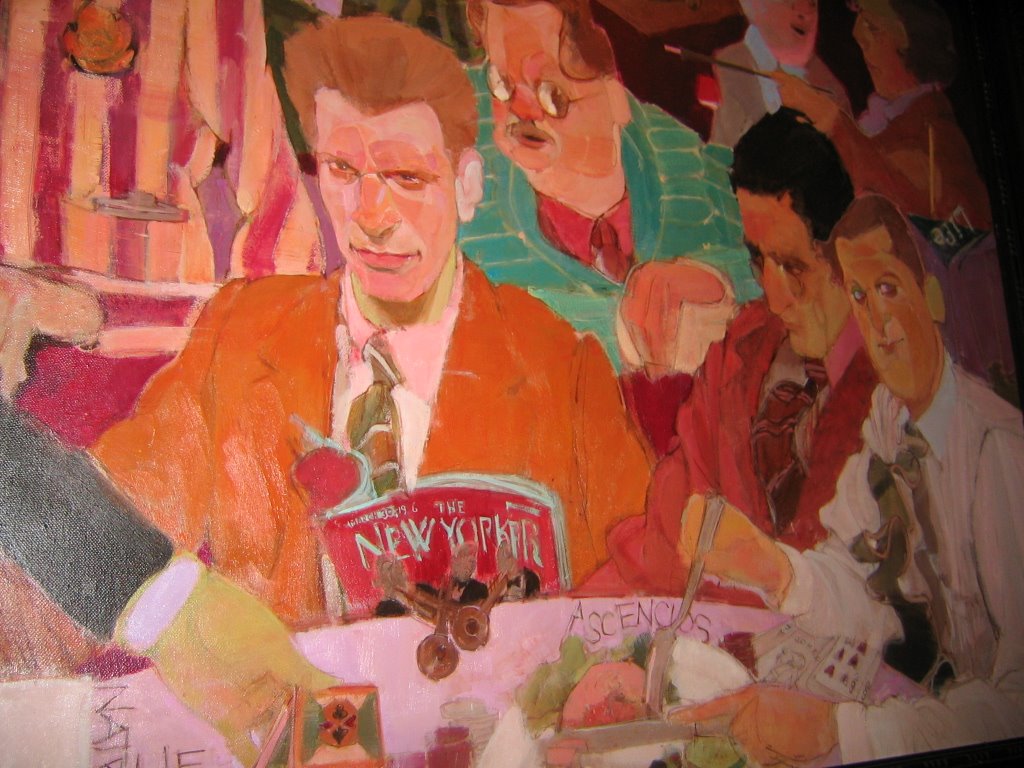
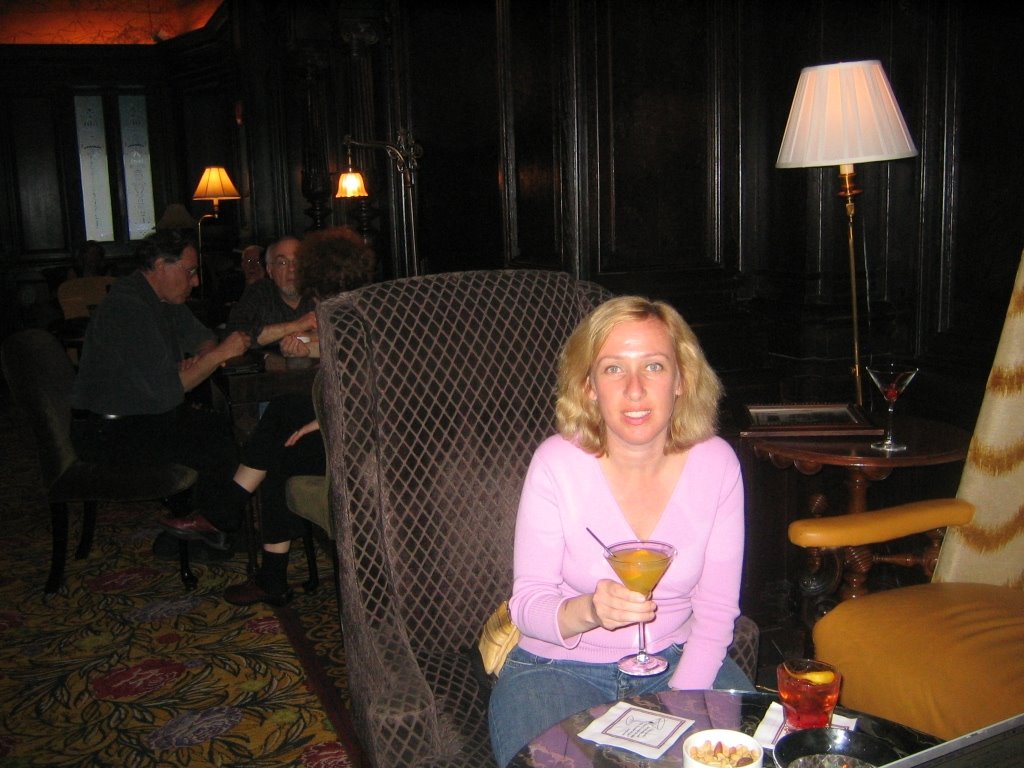
Now the history seeking tourist can drink with pleasure. A sense of the hotel's past is everywhere, from the tiny couch across from the front desk for the Algonquin house cat Matilda to Natalie Ascencios's painting "A Vicious Circle" hanging behind the round table. We arrived on a wet afternoon and were immediately charmed by the dark wood lobby and the cocktail lounge filled with comfortable chairs, framed photos of famed guests, and, perhaps, guests about to be famous working at their laptops. The courteous staff were amused as we took photos of the round table, painting, lobby, piano and each other. We then settled at a tiny table and sank into a larger version of Matilda's couch to drink in the Algonquin experience.

Classic (and very expensive) cocktails are a must so we began with the Matilda, a lovely mix of Mandarin Absolut, cointreau, orange peel, and champagne. Then a New Yorker, a Negroponi, and of course a martini (or two). The cocktails are served on a napkin printed with Parker's martini poem, accompanied by a bowl of salted nuts. As we sank deeper into the couch, a pianist softly played Cole Porter and Gershwin and history became alive.

For readers of "The New Yorker" the Algonquin is a holy shrine. "The New Yorker" was founded in 1925 by Harold Ross, a regular at the round table. "New Yorker" writers and editors would gather regularly at the Algonquin for lunch. Faulkner wrote his Nobel Prize speech in his Algonquin room in 1950; Gertrude Stein often stayed at the Algonquin as well. Actors, writers, musicians, the rich and the famous have stayed at and written about the hotel. Aware of its unique history, the Algonquin provides a leaflet "Tribal Tales of the Algonquin" featuring "New Yorker" ads from 1931 and facts about the hotel's noted visitors.

In the warm glow of $13 cocktails, classic American music, soft chairs, dark wood, Japanese wallpaper, images of "the vicious circle", thoughtful and attentive service, literary history is as exciting now as it was being made in "that glorious decade".

The Algonquin Hotel
59 West 44th St.
New York, New York 10036
212-840-6800
www.AlgonquinHotel.com

Tuesday, April 18, 2006

Hemingway's Havana Haunts, Havana, Cuba

Ernest Hemingway...American novelist, short-story writer, journalist, Nobel prize winner, ambulance driver, fisherman, secret agent, playboy, animal-lover, madman, alcoholic? Whichever title you choose, 'Papa' was his own preferred nomenclature, certainly during his time in residence on the Caribbean island of Cuba, his adopted home for two decades.

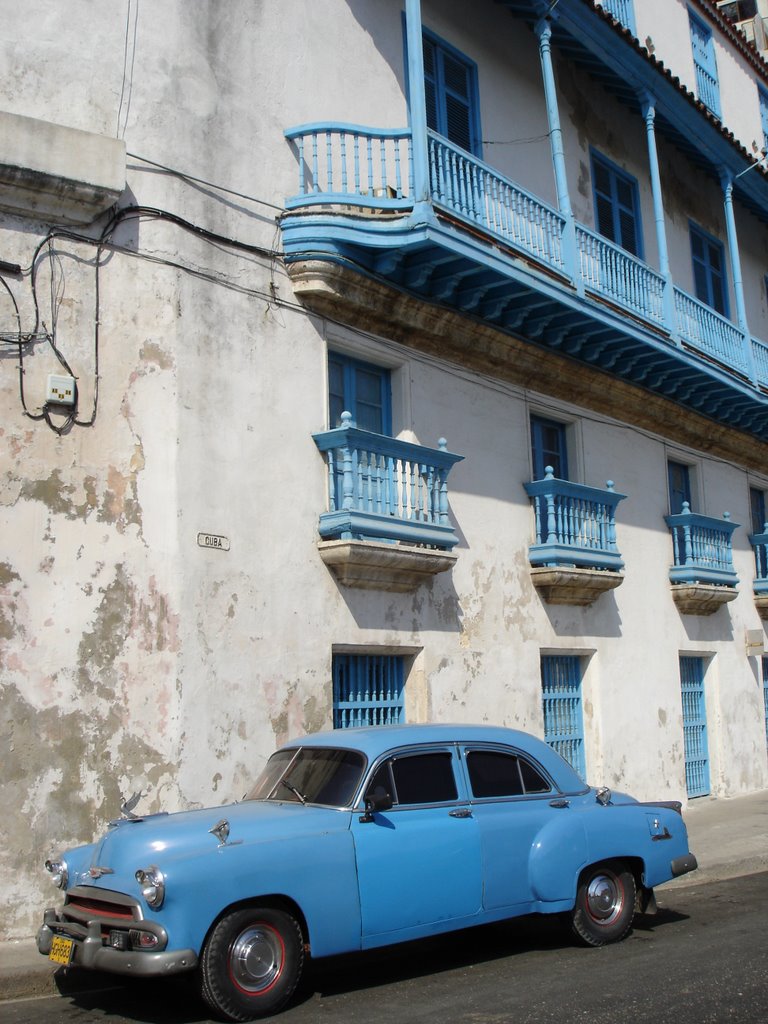
Today, Cuba's architectural glory is literally crumbling and you could be forgiven for feeling you have stepped into a time-machine and been transported to a former age as 1950s Chevrolet after 1950s Chevrolet passes you by in varying shades of pastel-ness. Despite initial appearances and if you look beyond the flaking paint and the cracking walls there lie hidden gems waiting to be discovered. One of these, the city of Havana, which in part is now a UNESCO world heritage site and gradually being restored, played host to 'Papa' Hemingway and provided inspiration for some of his most famous works. As you tour Havana's intoxicating old town, it is quite easy to punctuate your efforts with stops at the former drinking dens of the renowned drinker.

Within staggering distance of Edificio Bacardi, the former headquarters of the Bacardi rum clan, now famously at loggerheads with the Cuban government and no longer producing rum in Cuba, there's the Floridita. This bar is where Hemingway would come to drink daiquiris on his way home to his four dogs and 57 cats at Finca Vigia, his farm on the outskirts of the city. Hemingway once said that alcohol was his “best friend and severest critic”. After twelve daiquiris, reputedly Hemingway's normal intake in one session, it is perhaps easy to see why he considered the relationship a close one. Although partial to daiquiris as he was, Hemingway created his own version of the cocktail, now immortalised as the ‘Papa Doble’. The traditional Floridita daiquiri contains lime juice, a dash of maraschino, a shot of rum and half a teaspoon of sugar over crushed ice. Hemingway's variation cut out the sugar and doubled the rum!

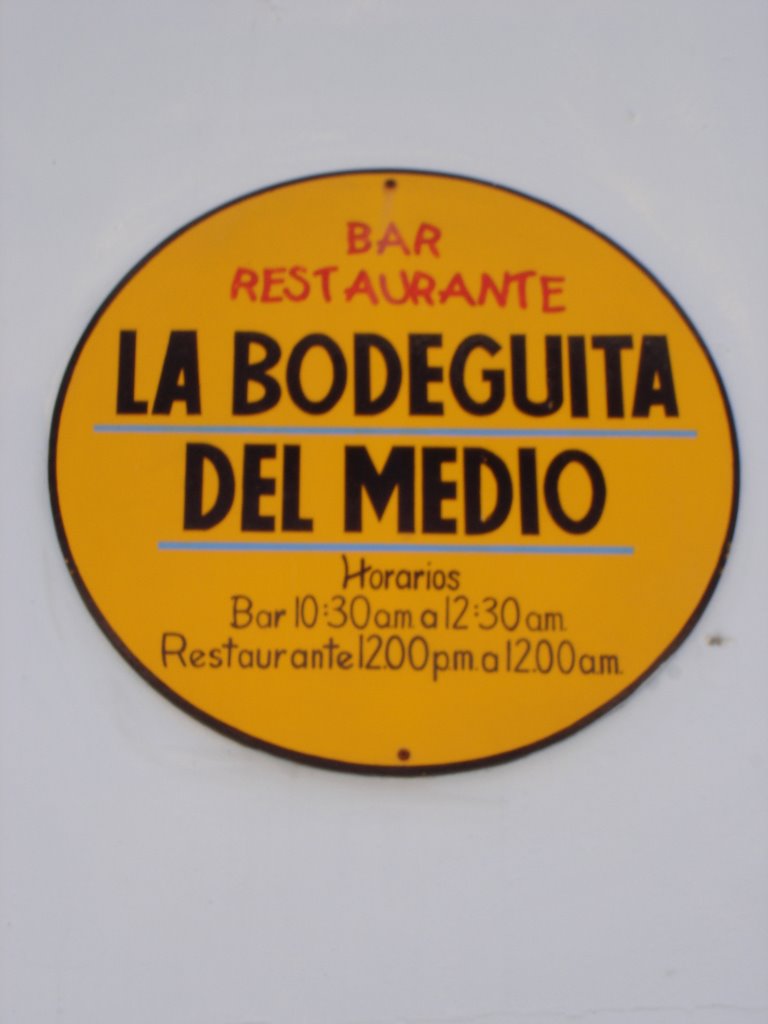
La Bodeguita del Medio, located close to Plaza de la Cathedral was another regular hangout of Hemingway's being where he would come when he fancied an alternative to the daiquiris. This bar and restaurant, was where Papa would indulge in a mojito or two and, supposedly, endorsed his penchant for this establishment's particular concoction of rum, sugar, mint, water and ice by adding his name to the graffiti on the walls. Nowadays, the place is overrun with tourists and sadly, can no longer be said to serve the best mojitos in town. One suspects the management believe poor service, over-salted food and weak drinks can be compensated for by the curiosity value of the scribbled-on walls and celebrity photographs adorning them. Hemingway is no doubt turning in his grave at the state of the watering hole he once loved.

For many years, Papa Hemingway stayed at the Hotel Ambos Mundos, close to the Plaza des Armes. The hotel has recently been renovated and now looks stylishly modern yet retains much of its traditional character. Hemingway stayed in Room 511, which can be viewed, at a fee for non-hotel guests, for seven years and is known to have worked on "For Whom the Bell Tolls" during this time. Today, the rooftop restaurant, reached by the birdcage lift, serves great mojitos and would perhaps be a more worthy recipient than La Bodeguita for 'the best mojito in town' award, although it should be said they are by no means the cheapest.

As you tour Cuba Hemingway's literary legacy lingers on but it has to be said that he has also left another legacy, of a more liquid kind, in Havana. Perhaps a more appropriate title for Papa Hemingway might be 'Old Man of the C'...the C standing for cocktail?

La Floridita
Obispo No.557 esq. a Monserrate
Tel:(53-7) 867 1299 or 867 1300 or 867 1301 Ext. 128
Fax:(53-7) 33 8856 or 86 68856
Weblink: http://www.floridita-cuba.com

La Bodeguita del Medio
Empedrado entre Cuba y San Ignacio
(Near Plaza de la Cathedral)
Tel: 62-4498

Hotel Ambos Mundos
Calle Obispo 153
(Near Plaza des Armes)

Thursday, March 02, 2006

Eating Shanghai, Street Level

"Eating History" began in 2004 when we found ourselves eating burgers in the the former garden of the Soong family mansion, having a drink on the roof of the Peace Hotel, devouring beef tenderloin in the Paramount Ballroom and delicious Thai food in TV Soong's bedroom. But, my favourite way of experiencing Shanghai history is to walk through its streets and alleys eating everything from Shanghai's famous soup dumplings (xiao long bao) to roasted chestnuts and sweet potatoes in season.

Street food is everywhere but history and food are nicely combined at Yuyuan Garden. Tourists are drawn to Yuyuan Garden for its picturesque buildings, garden, and shops. Avoid the expensive tourist restaurants and line up for soup dumplings at Nan Xiang (85 Yuyuan Lane). These dumplings look like a large Hershey Kiss but instead of chocolate, the bao is wrapped around a tasty mixture of pork and broth. The "soup" is created by moistening the dumpling wrap with soup. When the dumpling is steamed, a soup is formed inside. Be careful while eating as the hot soup tends to spurt out .

After shopping and sightseeing, continue exploring the fascinating area surrounding Yuyuan Garden. Here you will find ancient Shanghai existing in the shadow of the giant skyscrapers surrounding Old Town. As you leave Yuyuan Garden, cross Henan Nan lu. On Henan Nan lu you will find excellent Muslim kabobs cooked over coals. Buy a piece of flat bread and a coke and continue on your way to the Baiyunguan Temple located near the ancient city wall. Follow the tiny winding alleys. As we walked and ate, we discovered beautiful displays of vegetables that would put WholeFoods to shame. Hidden in a tiny alley we found a Buddhist nunnery, a small temple, and shops selling paper offerings to the dead. Always there are shops selling bowls of noodles and at breakfast, scallion pancakes (cong you bing). The Baiyunguan Temple has recently been rebuilt at its original site by the old city wall. The temple and statues are new but the history of Daoism in Shanghai is as old as the city itself.

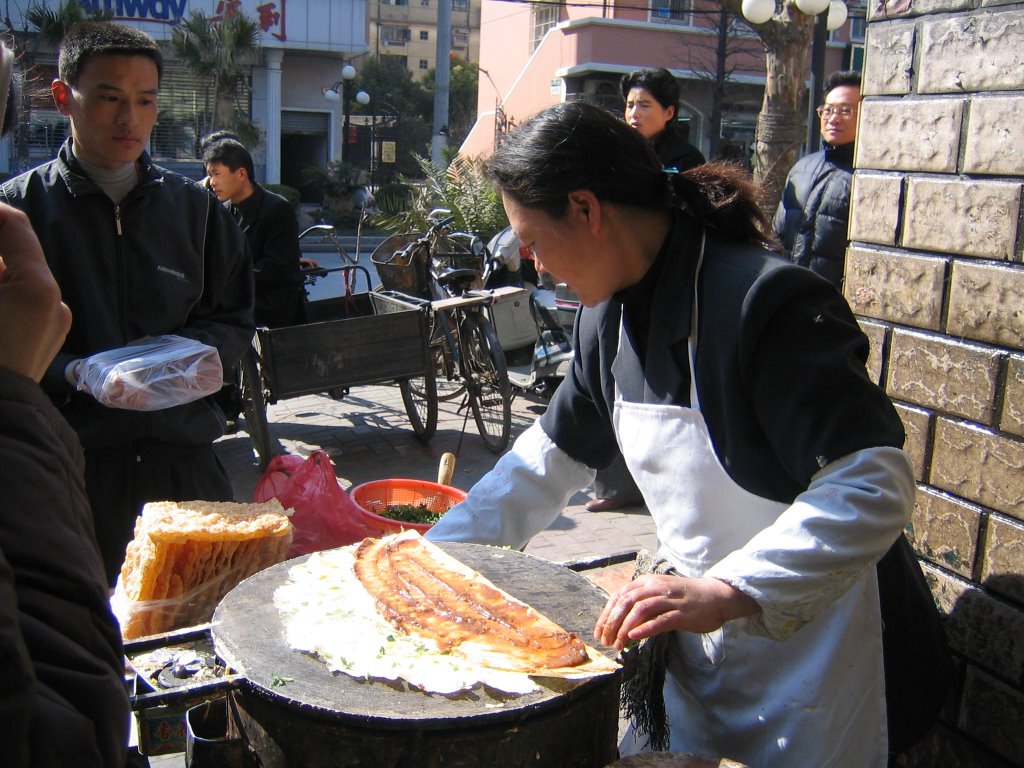
Wherever you wander in the older parts of Shanghai not yet turned into the 21st century, you will find markets selling all sorts of fresh and cooked foods. If you are visiting Shanghai, flee your hotel breakfast buffet and find the streets where the Shanghainese are eating their breakfast ji dan bing. If you are working in Shanghai, you have already made this treat a breakfast staple. The ji dan bing is a wonderful combination of French, Chinese, and Mexican all rolled together. You'll see people lined up in front of a drum shaped grill. The ji dan bing maker, spreads crepe batter over the grill, then cracks an egg on top, adds Hoisin sauce, chives, coriander, and mustard plant leaves. The crepe is folded over and spread with chili paste. You'll be asked how much spice (la) you'd like. Unless you are used to the hottest Mexican chile, answer "yidianr la" (a little spice). Then something crunchy is added--some think this is fried bean curd skin, some just call it "fried fry", whatever it is, it's wonderful. The crepe is folded over again, cut in two, and placed in a plastic baggy so you can walk and eat.

Breakfast, lunch, or dinner, spring, summer, winter, or fall, the streets of Shanghai are filled with food vendors who will provide the sustenance for you to experience Shanghai's fascinating past and present. Eat mooncakes in the fall, lichee nuts in the spring, roasted sweet potatoes in winter, and soup dumplings always!

Monday, February 20, 2006

Bettys Cookery School in Harrogate, UK

Further to the previous article about Bettys in Harrogate, readers might be interested to learn about what a day at the Bettys Cookery School is like and, in so doing, be part of Eating History in the making!

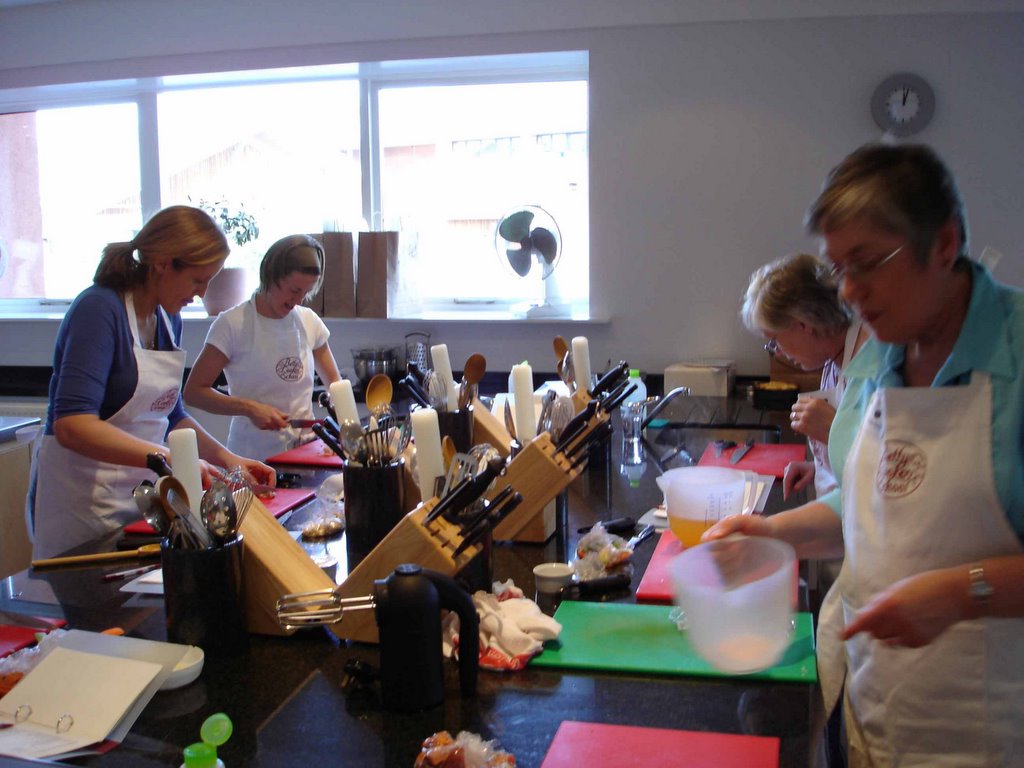
The Cookery School is located to the south of Harrogate itself on a rather bland industrial estate. However, as you drive in through the gates of the Bettys site you enter a land of Swiss quality, chalet-style buildings and, most importantly, edible fancies. The School itself is next door to the craft bakery set amid a car park featuring rather quaint sculptures of tea pots.

The low-rise building housing the School is clean, bright and functional containing a large training area equipped with granite work benches and high-tech demonstration wizardry along with all the essentials a budding chefette needs. In addition, there is also a relaxation area, cook’s library and small shop selling a modest selection of utensils and other tools of the trade.

My day learning to cook Swiss specialities started at 8.45am with coffee and shortbread followed by an introduction to the staff and housekeeping rules. By 9.15am all 15 trainees were observing Richard, the senior trainer, demonstrating how to make our apple cakes light and moist. By 10.30am, we had all replicated Richard’s efforts and had managed, without disaster, to get our rather large buns in the oven, so to speak. It must be said, that our creations might not have been so speedily assembled or, perhaps, successful, had the ingredients not been so carefully measured out and pre-bagged by the professionals in advance.

By this time, it was starting to feel rather warm and the coffee and croissant which accompanied our mid-morning break were very welcome. This breather also allowed time to chat with some of the other participants, mainly female, and learn that, for most, this was not their first visit. Indeed, it was their third or fourth time at the School and I was given some friendly warnings that my first foray into this foodie’s paradise was unlikely to be my last.

After the break, we made a pearl barley soup and seemed to chop ‘til we nearly dropped! Francisco, the second trainer, was, however, on hand with encouraging words that the effort would be worth it in the end. My soup certainly looked and smelt good by the end of it all. This is more than can be said for my efforts at rolling out pastry into a neat circle, which was our next task. And I used to be so good with play dough!

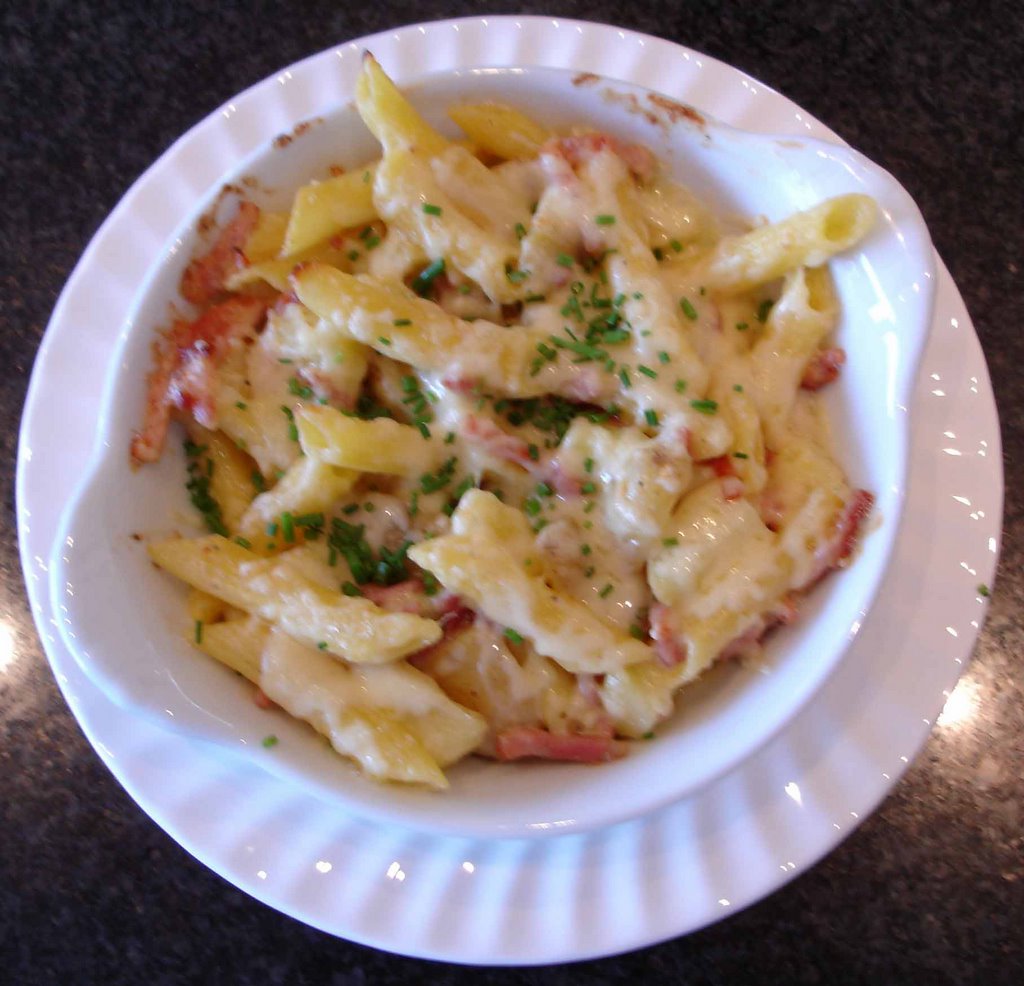
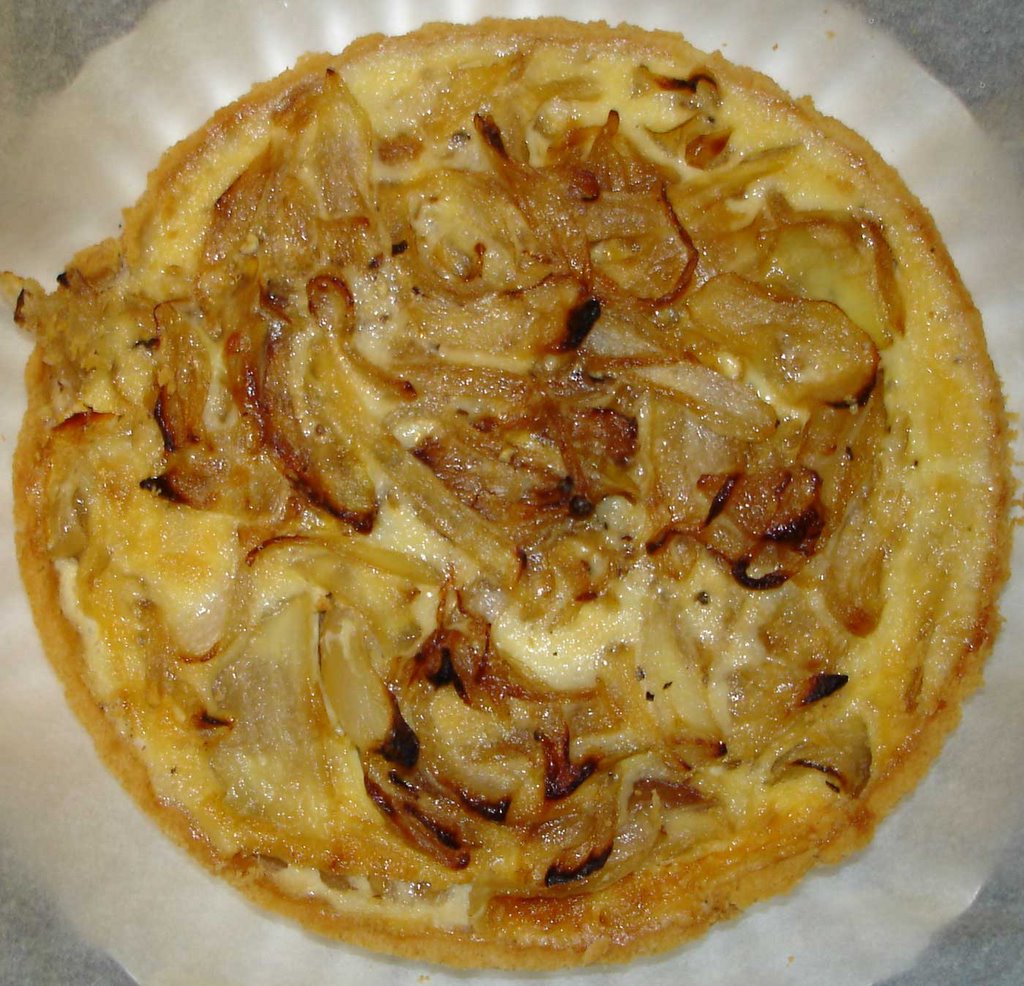
The pastry, once I eventually managed to get it looking mildly curvaceous, was put in the chiller and, in the afternoon, more chopping ensued to fill the pie base with onions and create a divine-looking Swiss Onion Tart. But, before this, we all set to on making lunch – a creamy alpine macaroni dish with bacon lardons, potatoes and raclette cheese. This was served with a lambs lettuce salad and Bettys’ bread, all washed down with a scrumptious glass of Swiss wine. Desert was ‘Engadine’, from the craft bakery – a tasty merengue and nut creation. Rather replete and slightly inebriated, I was very glad my fingers remained in tact as I attacked my onions post-lunch.

Our fifth dish of the day was a mushroom and onion sauce to take home and serve on warm toast. In fact, I went home with enough food to feed a small army…well, my family at least. Departure was delayed though by yet another round of coffee and cake. As four o’clock rapidly approached it had become very obvious we were not going to be allowed home without a full tummy and full carrier bag of goodies. I, however, managed to go home with two carrier bags full of goodies as I also succumbed to the temptations of the kitchen shop by purchasing my own tools to recreate my Swiss specialities at home.

The proof of the pudding comes in the tasting and, all I can say is that the silence which descended over the dinner table later in the evening as my family tucked into the Swiss Onion Tart said it all! Compliments to the chef!

For more details of Bettys Cookery School visit: www.bettyscookeryschool.co.uk