Showing posts with label Shanghai. Show all posts

Monday, November 27, 2006

Party like The Party at Rui Jin, Shanghai, China

In the heart of Shanghai's French Concession lies an oasis of calm and respite offering a breather from the noise, chaos and pollution of one of the world's mega-cities.

The Rui Jin hotel and garden complex comprises of a number of buildings dating back to Shanghai's previous heyday of the 1920s and now encountering a resurgence in the 21st century boom the city is now experiencing.

The two original buildings of the four located on the estate, which also houses three gardens and a small lake, were built in the 1920s by a British man, Henry Lester 'Mohawk' Morris. The other two buildings on the estate were completed in the 1930s. Morris was the founder of the North China Daily News, a horse and greyhound breeder and leading figure on the local dog-racing circuit - he practically owned the 'canidrome' on Maoming Lu. Along with his two sons, Harry and Hayley, a German businessman and a Japanese ex-pat, Morris lived on the estate for many years.

Mohawk Morris remained on the estate until his death in 1952 but prior to this most of the buildings were taken over by various political factions. During the Japanese occupation, part of the estate was used by the Mitsui Trading Company and the Mitsui Garden was established. In 1945, the Kuo Ming Tang used the property as their headquarters and Madame Song Mei Ling, Chiang Kai Shek's wife, once stayed here. The Communist Party moved in in 1949 and the buildings were used by a number of Party officers including Shanghai's first mayor, Mr Chen Yi. In 1956, the estate became a regional government hotel and many of China's leaders, as well of heads of state from around the world, stayed here. The guesthouse was opened to the public in 1979.

Now, as well as containing the Rui Jin Guesthouse, part of the complex is occupied by restaurants and bars. Most notably, the Face Bar, which is housed in a large, red-bricked villa. The Face Bar is part of a chain of Asian 'caravanerseri' bars and provides a relaxing environment filled with rich colours and Chinese artifacts, including a number of traditional raised beds. The bar caters for the Shanghai elite and as well as an assortment of drinks serves divine desserts, which can also be found at the Visage cafe in the Xintiandi complex a few blocks away.
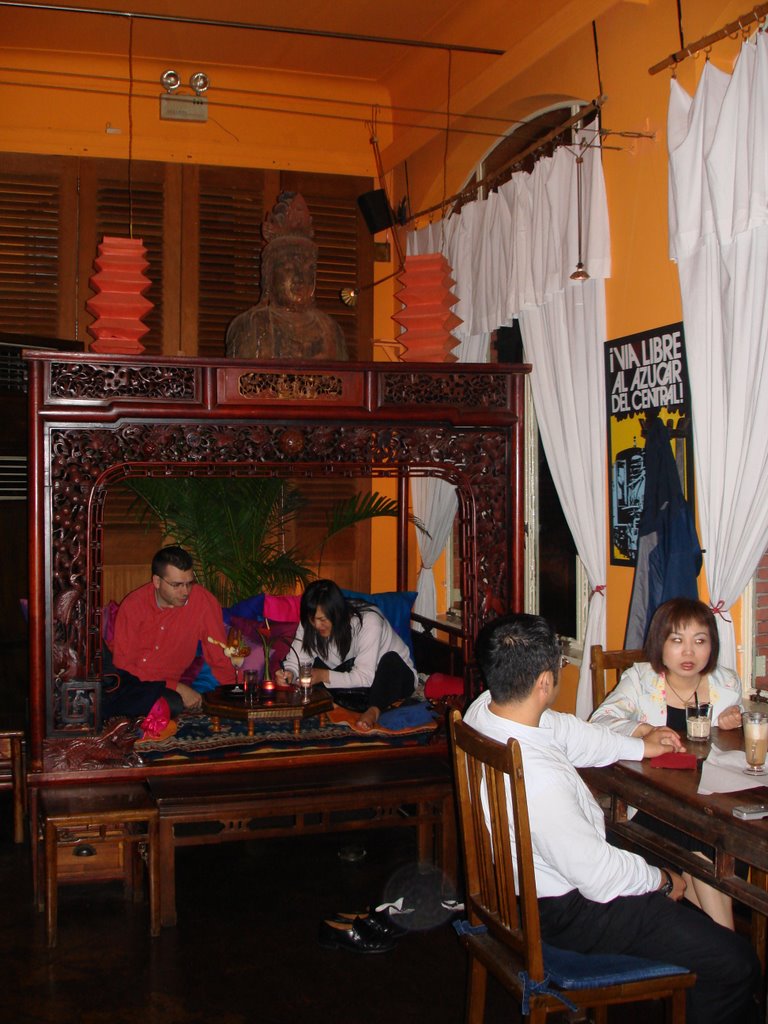
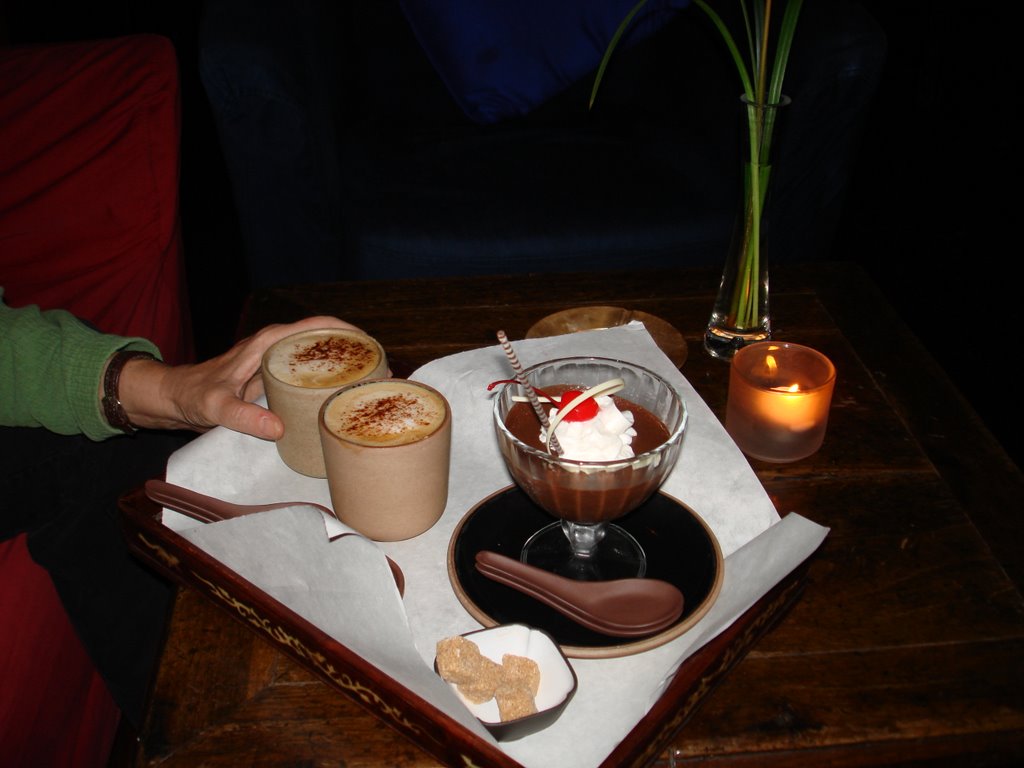
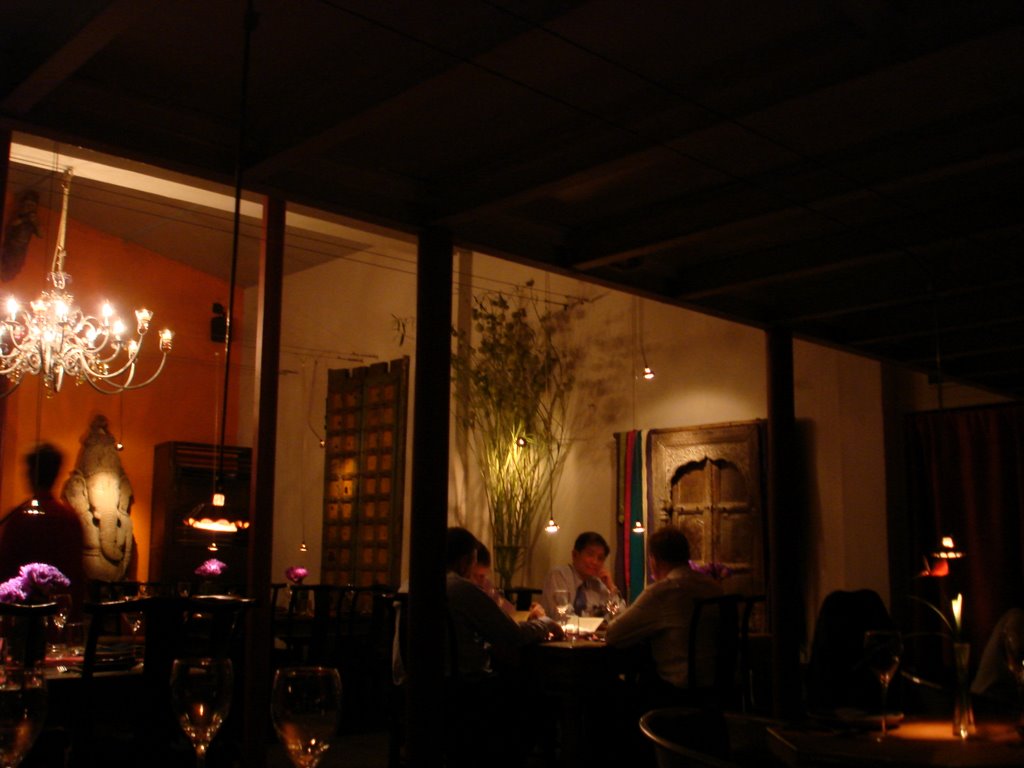
Also housed in the same building as the Face Bar is the Lan Na Thai restaurant. Lan Na Thai means 'many rice fields' and is the name of a region in northern Thailand. The food is delicate and authentic with prices of approximately 100-100RMB for a main course. Just next door, in what appears to be a converted garage, is the Indian restaurant, Hazara, named after an Afghan tribe and region. The food comprises of traditional snacks, curries, tandoori and handi-cooked specialities. All are deliciously spiced with complementary flavours. A meal for two with beers is in the region of 600RMB so not cheap for China but worth the splurge if you have a big wallet. The style of cuisine served emanates from northern India and is served in a beautifully decorated dining room full of original Indian-crafted items. The bonus of all these restaurants being housed in the one complex is that you can finish off the evening with coffee and an aperitif in the beautiful grounds under the trees lit with romantic lanterns and feeling a million miles away from the hustle and bustle of China's second city.
http://www.facebars.com/en/shanghai/restaurant/

Discovering New Heights in Shanghai, China

The Bund in Shanghai is a one mile stretch of the western side of the Huangpu River and has been witness to much of the city's turbulant history. The word 'Bund' is thought to originally come from the Urdu word 'band', meaning an embankment, levee or dam, and to have been brought to Shanghai by the hotelier, Victor Sassoon, who built the Cathay Hotel (now called The Peace Hotel) on the corner of The Bund and Nanjing Road. Originally a tow path along the river, the Chinese authorities required 30 feet of space to be left between the water's edge and any buildings constructed along The Bund in order to allow movement up and down the path and account for tidal variation.

Buildings started to be constructed along The Bund, formerly part of the British settlement but later becoming part of the international settlement, in the late 19th century and the building boom continued into the early part of the 20th century. This area along the river rapidly became a major banking and trading hub in East Asia.

After the Communists came to power, many of the banks and trading houses along The Bund were closed or forced to move out. A later reversal of policy saw many of the landmark buildings restored to their former use but it was in the 1990s that the Shanghai Municipal Government decided to regenerate the area in a bid to boost tourism. The view of The Bund has now changed with a 10-metre high levee and walkway constructed in order to prevent flooding. Despite its ugly appearance the walkway provides promenading opportunities for both Shanghai residents and tourists as well as great views of both the buildings on The Bund, the Huangpu river traffic and the Pudong skyscrapers beyond.

Towards one end of the mile-long stretch, lies No.3 The Bund, an elegant post-renaissance building built in 1916 by the Union Assurance Company and for many years occupied by the East Asiatic Bank and the Mercantile Bank of India.Having fallen into disrepair, the building was re-designed by a US architect, Michael Graves, and re-opened in 2004. The building now houses designer shops, a spa, an art gallery and three excellent restaurants bringing a touch of style back to The Bund, not that it ever really went away for long.

On the 7th floor is New Heights, a contemporary brasserie offering fabulous views, great food and stylish dining at a much more reasonable price than some neighbouring restaurants on The Bund.

The interior is modern with a wonderful wine cellar lining the interior corridor, open kitchens, a bar area and 'Ally Mcbeal style' conveniences i.e. unisex. The exterior though is where it's at and it's well worth booking a spot on the terrace in order to benefit from its superlative view. Outdoor heaters are provided for nights with a chill in the air. If you're able to really splash out, you might be interested in the Cupola, which houses two private dining rooms, above the terrace.

The restaurant kitchen is headed by Neal Giles, an Australian who has previously worked at the Burj Al Arab in Dubai and the menu, catering for both Asian and Western tastes, amuses by offering things that swim, things that walk etc. A nice touch to finish is the chance to have mini deserts - half price and half the calories but all the taste. The hot chocolate fondant with rosemary ice cream (pictured) is simply divine. However, if you really want to finish the night with a Shanghai flourish take a stroll along The Bund and simply drink it all in.

Address: 7/F, 3 on the Bund, Shanghai

Tel: 021-63210909

Opening hours: 10:00 - 02:00

Total bill for 2 with wine: approx 400-500RMB

All major credit cards accepted.

Reservations recommended.

Thursday, March 02, 2006

Eating Shanghai, Street Level

"Eating History" began in 2004 when we found ourselves eating burgers in the the former garden of the Soong family mansion, having a drink on the roof of the Peace Hotel, devouring beef tenderloin in the Paramount Ballroom and delicious Thai food in TV Soong's bedroom. But, my favourite way of experiencing Shanghai history is to walk through its streets and alleys eating everything from Shanghai's famous soup dumplings (xiao long bao) to roasted chestnuts and sweet potatoes in season.

Street food is everywhere but history and food are nicely combined at Yuyuan Garden. Tourists are drawn to Yuyuan Garden for its picturesque buildings, garden, and shops. Avoid the expensive tourist restaurants and line up for soup dumplings at Nan Xiang (85 Yuyuan Lane). These dumplings look like a large Hershey Kiss but instead of chocolate, the bao is wrapped around a tasty mixture of pork and broth. The "soup" is created by moistening the dumpling wrap with soup. When the dumpling is steamed, a soup is formed inside. Be careful while eating as the hot soup tends to spurt out .

After shopping and sightseeing, continue exploring the fascinating area surrounding Yuyuan Garden. Here you will find ancient Shanghai existing in the shadow of the giant skyscrapers surrounding Old Town. As you leave Yuyuan Garden, cross Henan Nan lu. On Henan Nan lu you will find excellent Muslim kabobs cooked over coals. Buy a piece of flat bread and a coke and continue on your way to the Baiyunguan Temple located near the ancient city wall. Follow the tiny winding alleys. As we walked and ate, we discovered beautiful displays of vegetables that would put WholeFoods to shame. Hidden in a tiny alley we found a Buddhist nunnery, a small temple, and shops selling paper offerings to the dead. Always there are shops selling bowls of noodles and at breakfast, scallion pancakes (cong you bing). The Baiyunguan Temple has recently been rebuilt at its original site by the old city wall. The temple and statues are new but the history of Daoism in Shanghai is as old as the city itself.

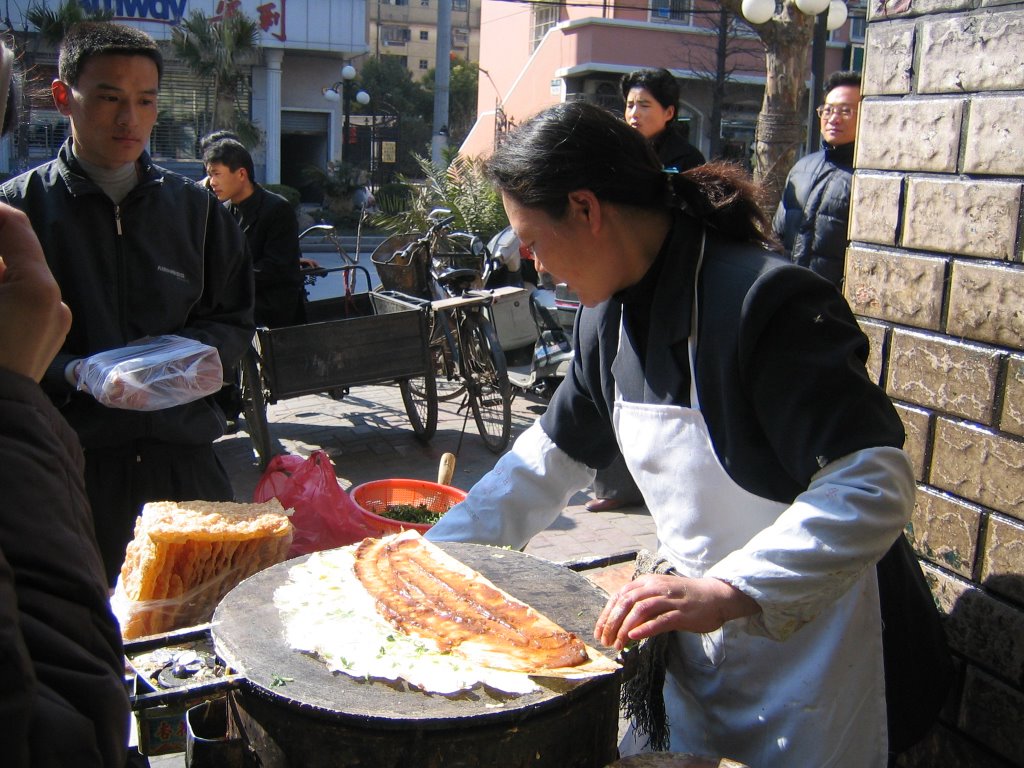
Wherever you wander in the older parts of Shanghai not yet turned into the 21st century, you will find markets selling all sorts of fresh and cooked foods. If you are visiting Shanghai, flee your hotel breakfast buffet and find the streets where the Shanghainese are eating their breakfast ji dan bing. If you are working in Shanghai, you have already made this treat a breakfast staple. The ji dan bing is a wonderful combination of French, Chinese, and Mexican all rolled together. You'll see people lined up in front of a drum shaped grill. The ji dan bing maker, spreads crepe batter over the grill, then cracks an egg on top, adds Hoisin sauce, chives, coriander, and mustard plant leaves. The crepe is folded over and spread with chili paste. You'll be asked how much spice (la) you'd like. Unless you are used to the hottest Mexican chile, answer "yidianr la" (a little spice). Then something crunchy is added--some think this is fried bean curd skin, some just call it "fried fry", whatever it is, it's wonderful. The crepe is folded over again, cut in two, and placed in a plastic baggy so you can walk and eat.

Breakfast, lunch, or dinner, spring, summer, winter, or fall, the streets of Shanghai are filled with food vendors who will provide the sustenance for you to experience Shanghai's fascinating past and present. Eat mooncakes in the fall, lichee nuts in the spring, roasted sweet potatoes in winter, and soup dumplings always!